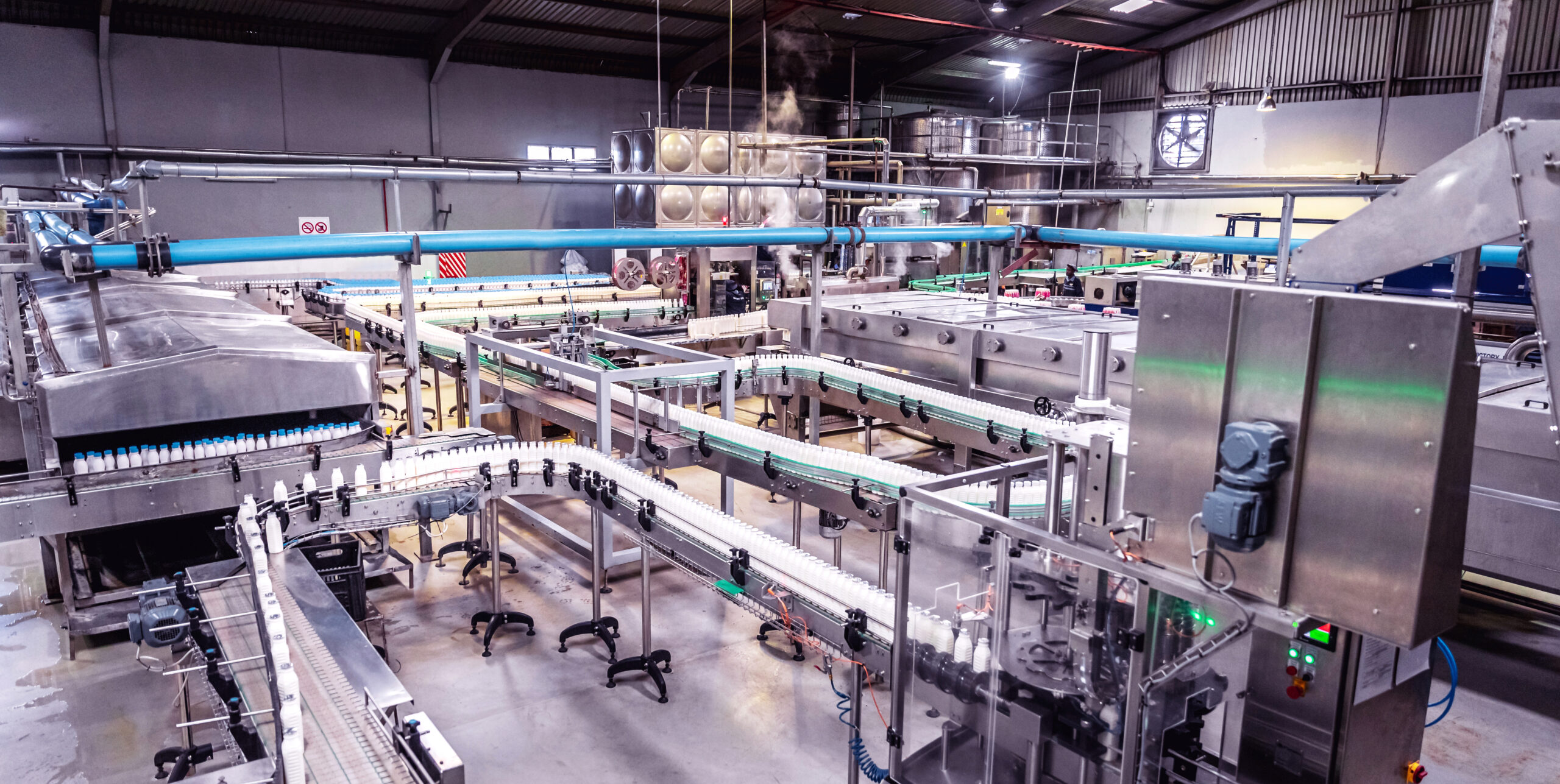
The term ‘process engineering’ might sound complicated, but it is present in everyone’s lives. If you look around you, almost every object within your reach is the result of a process. The smartphone in your hand, the recycled paper of your notebook, the life-saving medication in your cabinet, and even the pasteurised milk in your fridge are products of a transformation process. Behind these everyday essentials lies a field of engineering behind manufacturing industries: Process Engineering.
The Protected Identity of the Engineer
Before diving into the what, we must address the who. In most parts of the world, ‘Engineer’ is a protected title—and for good reason. Engineering is a professional identity forged through a specific, foundational education.
Whether someone is a Civil, Mechanical, or Food Engineer, the first two years of their bachelor’s degree are remarkably similar. This is because all engineering disciplines are built on the same pillars: rigorous mathematics, physics, solid mechanics, fluid mechanics, and materials science. This foundational training is what separates an engineer from a technologist or a life sciences professional. The subsequent years are when specific disciplines within that engineering branch are taught extensively, but always within the bounds of a mechanistic understanding of the processes, products, structures, and systems involved.
This distinction is codified globally. The International Engineering Alliance, through the Washington Accord, mandates an accredited undergraduate degree as a prerequisite for professional licensure. A Master’s or PhD in an engineering-related field does not retroactively substitute for the core physics and mathematics undergraduate curriculum of engineering bachelor’s degrees. For example, if you are a biologist with a Master’s degree in Bioprocess Engineering, you shouldn’t call yourself an engineer. That’s because you have the “top” of the building (the specialisation) without the “foundation” (the core engineering undergrad). Additionally, you cannot, by law, be a chartered engineer in many jurisdictions. This framework exists to protect technical integrity and public safety.
What is Process Engineering?
If engineering is the application of maths and natural sciences to solve problems, then Process Engineering is about solving and improving transformation problems. It is a subset of engineering focused on the design, analysis, control, and optimisation of industrial processes.
The goal of Process Engineering is to transform raw materials into valuable products while minimising waste, saving natural resources, and ensuring absolute safety. Like all engineers, a process engineer views a factory or a production line from a “big picture”, systems perspective—not as a series of separated problems, but as a system of interconnected parts that influence each other.
Process Engineering is not exactly a standalone bachelor’s degree but rather a specialised subset of the profession where engineers from various fields—such as chemical, food, or mechanical engineering—focus their expertise on the design, control, automation, and optimisation of industrial systems. In other words, process engineers come from diverse engineering disciplines. For example, a chemical engineer may work as a process engineer, but not all process engineers are chemical engineers.
The Universal Pillars of Process
While many people associate Process Engineering with fluid-based industries like chemicals or beer, it extends into every corner of modern manufacturing—energy, construction, motorsports, pharmaceuticals, petrochemicals, food and beverage, and beyond.
In the mechanical and automotive sectors, for instance, process engineers can oversee the assembly line. In these environments, process engineers do not formulate chemicals or biological products; instead, they design the sequence of operations required to turn raw metal, plastic, or composite materials into high-precision parts. They design the sequence of heat treatments, precision machining, and robotic welding required to fabricate thousands of identical, high-performance parts. To this end, they calculate the ideal speed of the robotic assembly lines, map out the thermal stresses a part undergoes during automated welding, and determine how to eliminate bottlenecks in the production flow. Whether it is moving liquid through a pipe or a stamped metal door frame down an assembly line, a process engineer designs the “journey” of that product.
In the food industry, to exemplify a different manufacturing sector, a process engineer looks at the desired properties of a food product or beverage and determines the exact processing route it must take to meet product specifications. This might include determining the ideal process conditions for each unit operation or processing stage (filtration, drying, distillation), designing processes or equipment for a given product (like calculating the number of stages and height of a distillation column), calculating conveyor-belt speeds and the appropriate flow rates in processing equipment, and identifying critical control points essential for both process and product safety. This prevents product contamination and industrial accidents.
You see? Completely different industries and products, but similar competencies. This is because, despite the different outputs, they all speak the same “universal language” of engineering and process design and control.
The Value of a Process Engineer
A great asset of a process engineer is found in scalability. Industries hire process engineers because they are the bridge between a theoretical design and a profitable, safe reality. A company might have a brilliant product concept or design a flawless prototype, but without a process engineer, they cannot achieve consistency at scale. Moreover, process engineers are the guardians of efficiency. In modern manufacturing, even a variation of a fraction of a millimetre or a single degree in temperature can result in thousands of euros in wasted material and lost time. Companies rely on process engineers to implement statistical process control, perform root-cause analysis when defects occur, and use Lean methodologies to eliminate waste.
Process engineers are also hired to minimise the input-output gap: they reduce the energy consumed, the water wasted, and the raw materials discarded, directly impacting the company’s bottom line and sustainability goals. For example, a process engineer might find a profitable, scalable processing route for a food manufacturing by-product that would otherwise be discarded, generating carbon emissions or polluting water. This takes me to another example, this time in the realm of environmental engineering: water treatment. Process engineers oversee the multi-stage physical and biological filtration systems that turn undrinkable water into clean water for entire cities.
Ultimately, process engineers are hired to manage risk; by applying maths and the laws of physics to the production line, they ensure that the industrial transformation is predictable, safe for workers, and reliable for consumers.
From Blueprint to Reality: The Engineer’s Toolkit
In the industrial world, a process engineer’s work requires knowledge of process design, optimisation, and scale-up, and often uses process flow and instrumentation diagrams. These detailed drawings are the “maps” of the factory, representing every control layout and pipe for the various unit operations involved. To create these diagrams, engineers rely on Computer-Aided Design (CAD), which allows them to build a digital twin of the plant before a single bolt is turned.
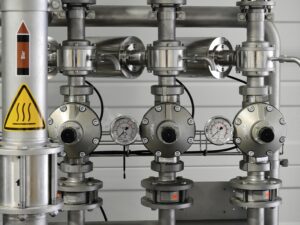
To put this into perspective: for my own engineering bachelor’s thesis, I designed an entire orange juice production plant. This wasn’t about the recipe; it involved CAD and complex engineering calculations for detailing specialised processing equipment, calculating material flows, determining ideal process conditions (like pasteurisation temperature and time), and integrating the right sensors and valves needed for process control—from the receipt of the raw materials to packaging and storage. I also conducted a techno-economic feasibility analysis—all to ensure the final product left the factory with the required safety and quality specifications at a reasonable cost. After all, who wants to pay a fortune for high-quality juice, right?
While this isn’t an exhaustive list, the skills and responsibilities of process engineers often include:
- Process Simulation: Using software to model and simulate the complete process before it is carried out. This helps predict and optimise outcomes before wasting time and materials, while also avoiding risks to factory workers and consumers.
- CAD (Computer-Aided Design): Essential for creating the spatial layout of a plant, allowing engineers to design processes, size equipment, and ensure that piping networks are functionally integrated.
- Piping and Instrumentation Diagrams (P&IDs): Detailed technical drawings that represent all control and piping layouts for the various unit operations involved in a transformation.
- Process Flow Diagrams (PFDs): Visual schematics that illustrate the sequence of major operations, key controls, and required process parameters like flow rates and temperatures.
- Process & Product Safety: Following safety protocols such as HAZOP (Hazard and Operability), HAZID (Hazard Identification), and HACCP (Hazard Analysis and Critical Control Points) to identify and mitigate risks before they cause harm.
- Equipment Design & Sizing: Designing specialised machinery that can handle different materials to obtain a product with the right specifications.
- Mass and Energy Balances: The fundamental calculations that ensure the amount of raw material and energy entering a system equals the output plus any waste or accumulation.
- Scale-Up: Moving a product from a beaker to a massive industrial bioreactor or designing a mega-sized food dryer from a small prototype.
Experience Comes with Time—But the Foundation Must Be There
As in any profession, becoming a great process engineer requires more than just a degree; it requires years of experience and a systems-thinking mindset. Seasoned engineers develop an intuitive sense for the physical world and might reach a conclusion or reasonable hypothesis just by looking at a factory line or equipment. This blend of rigorous training and practical “tricks of the trade” is what makes the process engineer indispensable. Whether they are working in oil and gas, nuclear plants, composites, or food manufacturing, they are the ones who design the essential products, infrastructure, and energy that power our modern society.
In conclusion, when we recognise the engineer as a trained guardian of complex systems, we empower them to advance a more efficient, safe, and sustainable world.