
If you ate breakfast this morning, you have Food Engineering to thank. Unless you happen to be a subsistence farmer, most calories you consume have been touched by a rigorous branch of engineering that is as complex as aerospace and as vital as civil infrastructure.
Despite being the backbone of our global food supply, Food Engineering is often the “invisible” discipline, buried within other engineering departments or, even worse, confused with food science and nutrition. As we face a burgeoning global population and a rapidly warming planet, it’s time to stop treating Food Engineering as the “forgotten” engineering discipline and see it for what it is: a strategic pillar of climate action and food security.
What is Food Engineering, Anyway?
At its core, Food Engineering is the application of engineering principles to the lifecycle of food—from the moment it leaves the farm to the second it hits your fork.
While an agricultural engineer addresses on-farm production, a nutritionist focuses on health effects, and a food scientist focuses on composition and quality responses to processing, a food engineer focuses on post-harvest production systems. The profession sits on four knowledge “pillars”:
- Transport Phenomena & Fluid Mechanics: How heat, mass, and momentum move through biological materials throughout processing and storage.
- Thermodynamics: Understanding the energy required to freeze, dry, or cook food at scale.
- Materials Science, Rheology & Solid Mechanics: Treating food as a complex, “living” material that changes its thermal and physical properties under pressure or heat.
- Food Quality & Safety: Using control systems and technologies to ensure that food is tasty, safe, nutritious, and free from contamination, which requires training in chemistry and microbiology too, not just physics.
A food engineer’s responsibilities are vast and highly technical:
- Process Scaling & Control: Moving a recipe from a 1-litre beaker to a 10,000-litre bioreactor.
- Equipment Design: Creating specialised machinery that can handle complex fluids (like ketchup or yoghurt) without breaking down or damaging the product.
- Product Formulation: Using engineering to optimise textures and shelf-stability for nutritious and appealing foods and beverages.
- Packaging & Storage: Developing smart materials that keep food fresh while minimising plastic waste.
- Process Optimisation & Control: Ensuring food transformation processes are effective, safe, and sustainable, including energy efficiency and minimal waste generation.
- By-product Valorisation: Turning industrial leftovers like grape pomace or soybean meal into valuable materials, like sustainable proteins and natural pigments.
Clearing the Confusion: Engineers vs. Scientists
One of the greatest hurdles the discipline faces is a lack of identity. Many people mistake Food Engineering for Food Science—even though there’s a big difference between life sciences and engineering.
To put it simply: Food Science is about the what and the why (the chemistry and microbiology of the food itself). Food Engineering is also about the how (the machinery, the physics, the system, and the scalability).
Think of it like the difference between a pharmacist and a chemical engineer. A pharmacist understands how a drug interacts with the body; a chemical engineer designs the processes to ensure millions of people can access that drug safely and affordably.
Another example is “the surgeon analogy”: just as a surgeon holds a specific mandate for intervention that a general practitioner does not, requiring a view of the body as a system, a Food Engineer possesses the specialised toolkit required to design and optimise food processing systems.
The “Fake Food” Myth and the Language Trap
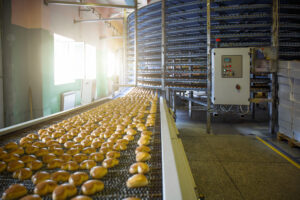
There’s another common misconception that Food Engineering means “engineered” food in the sense of “fake” or “ultra-processed” junk. This stems from misinformation and often from a quirk of the English language; many hear “engineering” and think of industrial artificiality—this doesn’t happen in Romance languages, for example.
In reality, engineering is what makes healthy, diverse, and sustainable food possible at scale, from pasta, tofu, and cashews to that super-realistic plant-based burger. Without the engineer, we can’t scale the solutions we need to feed the planet sustainably.
Why Universities Must Invest in Food Engineering: Climate Action & Food Security
We are currently at a crossroads. We must feed 10 billion people by 2050 while simultaneously slashing the carbon footprint of the food industry—which accounts for over one-third of global greenhouse gas emissions.
But it’s not just about carbon—it’s about justice. Our current food system is a normalised culture of harm. Annually, it exploits and kills trillions of animals (sentient beings like you and me), devouring massive amounts of land and water, while nearly a billion people remain food insecure. This is both a moral failure and a major engineering inefficiency.
Overcoming this crisis requires more than small tweaks or goodwill—it needs engineers to design us out of this mess.
Universities in Europe have, ironically, sidelined Food Engineering programs or let the discipline be absorbed into broader Chemical or Agricultural Engineering departments. Meanwhile, nations in Latin America and Asia are leading the way, recognising that Food Engineering is the “engine room” of manufacturing GDP, as agrifood often accounts for a large share of a nation’s industrial output.
-
Climate Action & The Paris Agreement
Climate action isn’t just about electric cars; it’s also about the efficiency of our food systems—the difference between input (or resources) and output (products). Agriculture, especially animal farming, is a leading cause of climate change and the top driver of deforestation and species extinction—a fact that cannot be swept under the rug any longer.
Food engineers are the ones who design low-energy processes, carbon-neutral cold chains, sustainable food products, and waste-to-energy systems. If we want to meet climate targets, we need engineers who can optimise food production in a systemic way.
-
Sustainable Proteins
The shift toward plant-based and cell-cultivated proteins is fundamentally an engineering challenge. It is the key to decoupling the foods we love from environmental collapse, animal suffering, and global hunger.
A scientist can grow muscle cells in a petri dish or obtain a dairy protein from batch fermentations in small reactors, but a Food Engineer solves the equations of non-isothermal, non-Newtonian flow and viscoelastic constitutive models to ensure that an animal-free protein actually feels and tastes like meat or dairy. It sounds complicated—and that’s exactly why it requires years of specialised engineering training.
It is also the engineer who designs energy-efficient bioreactors. Without the engineer, these “climate-friendly” foods remain expensive lab curiosities.
-
Food Security & Waste Reduction
Roughly one-third of all food produced is lost or wasted. Food engineers fight this by designing better post-harvest technologies—better drying, cooling, extraction, and packaging. This is far from “improving a recipe”; it’s a structural intervention in the global supply chain to ensure that food actually reaches the people who need it.
Interdisciplinarity is Good—But Too Much Can Be Dangerous
Universities are increasingly folding Food Engineering into broad, interdisciplinary departments. While collaboration is essential—and Food Engineering is arguably the most interdisciplinary engineering branch there is—this trend is often a double-edged sword that erodes the discipline’s core.
Engineering curricula that sacrifice foundational training in transport phenomena and process design for trendy, data-centric modules or life-science topics are a dangerous tactic that is bound to backfire. While digital literacy is important, replacing core engineering with non-mechanistic modules risks producing graduates who lack the physical grounding required to solve real-world problems.
This dilution also relates to academic staff. You can’t “post-graduate” your way into being an engineer. When we lean too heavily into interdisciplinarity, we trade systems thinking for compartmentalised problem-solving. We might design a great solution collaboratively and get a prediction from AI models, but without an engineer’s mechanistic understanding, we can’t scale that solution in the physical world. If we want to transform the food system, we need engineering expertise.
Reclaiming the Power of the Food Engineer
Way too often, food engineers are treated as “service providers” in industry—the people you call for a packaging solution or to extend the shelf-life of a product. This is a dangerous mistake. Food Engineering must be a strategic driver of innovation.
In academia, we must stop relegating food to the “general science” pile. If we are serious about the UN SDGs, universities must reinvest in Food Engineering as a standalone, rigorous discipline. Again, this requires a faculty led by a core body of trained engineers, supported—not replaced—by a complementary mix of other professions.
Occupying a small space in Chemical Engineering departments or being sidelined as a discipline in Food Science programs is also not enough; the complexity of biomaterials (which are alive, delicate, and complex) requires a specialised education that general engineering or life science programs simply don’t provide. Food Engineering has its own space.
The transition to a sustainable and responsible food system is an engineering challenge waiting to be solved. Let’s reclaim our identity and empower a new generation of food engineers to lead the charge.
Article by Dr Camila Perussello, PhD, an engineer accelerating sustainable food systems through research, education, and technical consulting. Camila specialises in process engineering and multiphysics simulation.